The Tenerife Airport Disaster: Los Rodeos, 1977
1977 · event
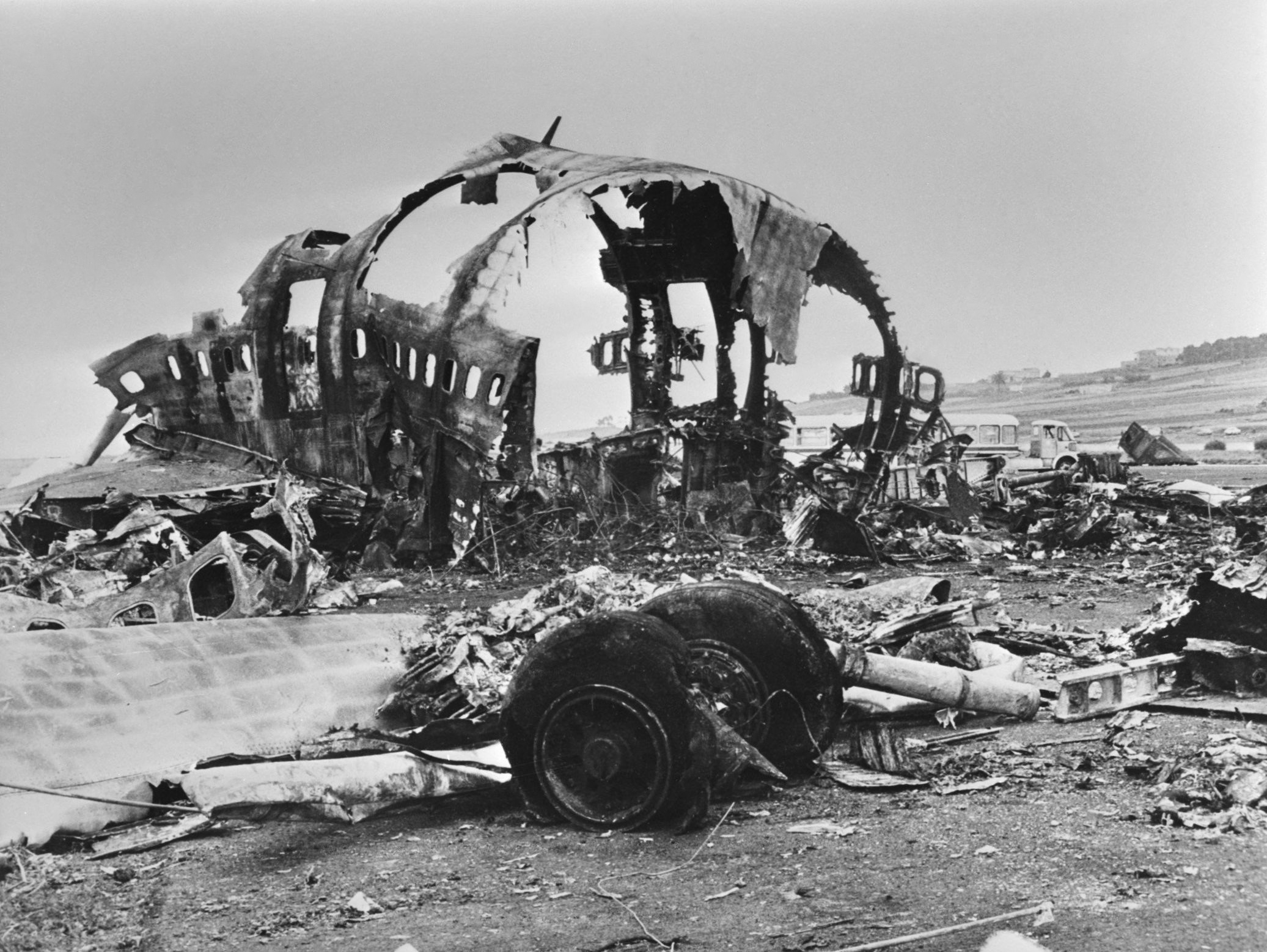
On the afternoon of 27 March 1977, two Boeing 747 passenger jets collided on the runway at Los Rodeos Airport on the Spanish island of Tenerife. Dense fog had settled across the airfield, reducing visibility to mere metres. KLM Flight 4805 began its takeoff run while Pan Am Flight 1736 was still on the same runway. The KLM aircraft struck the right side of the Pan Am jet at high speed. The impact and the fire that followed killed 583 people, making this the deadliest accident in the history of aviation. Sixty-one passengers and crew in the front section of the Pan Am aircraft survived.
Both aircraft had been diverted to Los Rodeos earlier that Sunday after a bomb explosion temporarily closed Gran Canaria Airport, their original destination. The small airport quickly became congested. Parked planes blocked the only taxiway, forcing departing aircraft to use the runway itself for taxiing. The KLM captain, misunderstanding radio communication with air traffic control, believed he had received clearance for takeoff. At the same moment the Pan Am crew were still searching for their exit in the fog and had radioed that they would report when clear.
All 248 people aboard the KLM flight died. Of the 396 people on the Pan Am aircraft, 335 lost their lives. Investigators from Spain and the Netherlands examined the circumstances. Both sides pointed to communication failures, though the Dutch inquiry emphasised mutual misunderstanding while Spanish authorities focused on the KLM captain's premature decision. KLM accepted responsibility and compensated the families of all victims.
The disaster transformed aviation safety worldwide. It demonstrated the critical need for clear, standardised language in all radio communication between pilots and controllers. Airlines and regulators introduced crew resource management training, which encourages every member of the cockpit to speak up and question decisions. The principle that a captain's authority must be balanced by teamwork became a cornerstone of modern flight safety, and the lessons from Tenerife continue to shape how pilots are trained today.