The Siege of Sarajevo: 1425 Days
1992 · event
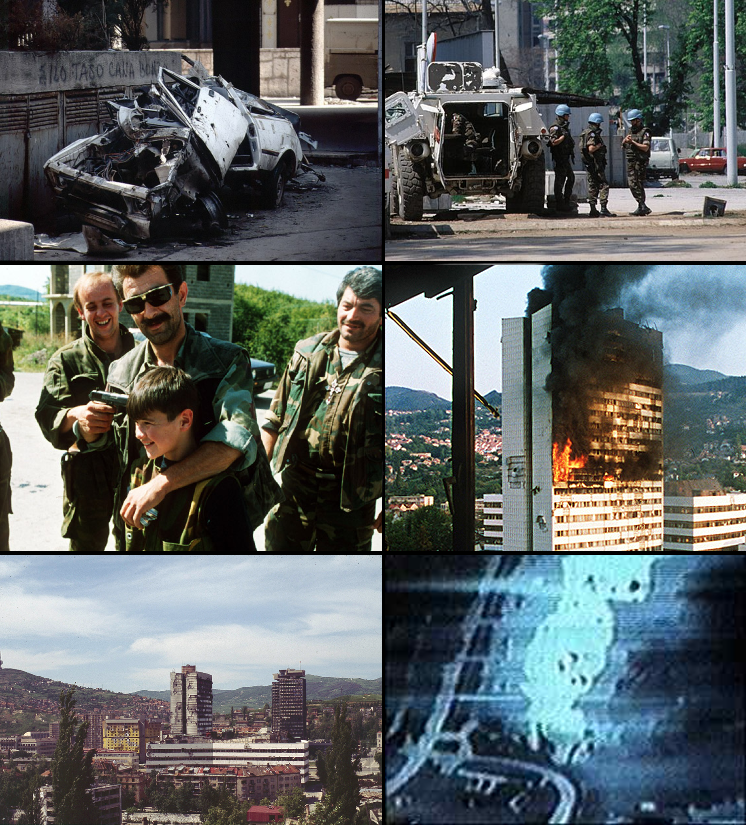
In the spring of 1992 the hills around Sarajevo were taken by forces that then held the city under fire for almost four years. The siege lasted one thousand four hundred and twenty five days, longer than any siege of a capital in modern warfare. Around eleven thousand people were killed, among them more than fifteen hundred children. The city that had hosted the Winter Olympics eight years earlier lived without electricity, running water, heating or safe streets.
Sarajevo had been known for the closeness of its communities, a place where a mosque, a synagogue, an Orthodox church and a Catholic cathedral stand within a few minutes of one another. Under siege its citizens improvised an entire life. They queued for water at standpipes in the open, cooked on stoves made from tin, grew vegetables on balconies, kept schools running in cellars, and carried on publishing newspapers, staging plays and holding a beauty contest whose winners held up a banner asking the world not to let them die.
The lifeline was a tunnel dug by hand under the runway of the airport and finished in 1993, eight hundred metres long and low enough that most people walked bent over. Food, fuel, medicine and news came through it. Above ground, the United Nations ran one of the longest humanitarian airlifts in history.
The National Library burned in August 1992 with around two million books and manuscripts inside, and citizens formed chains under fire to save what they could. The siege ended at the end of February 1996. Sarajevo today marks the anniversary with rows of empty red chairs along its main street, one for each person killed, and the small chairs for the children are counted separately.