Earthrise: Christmas Eve, 1968
1968 · event
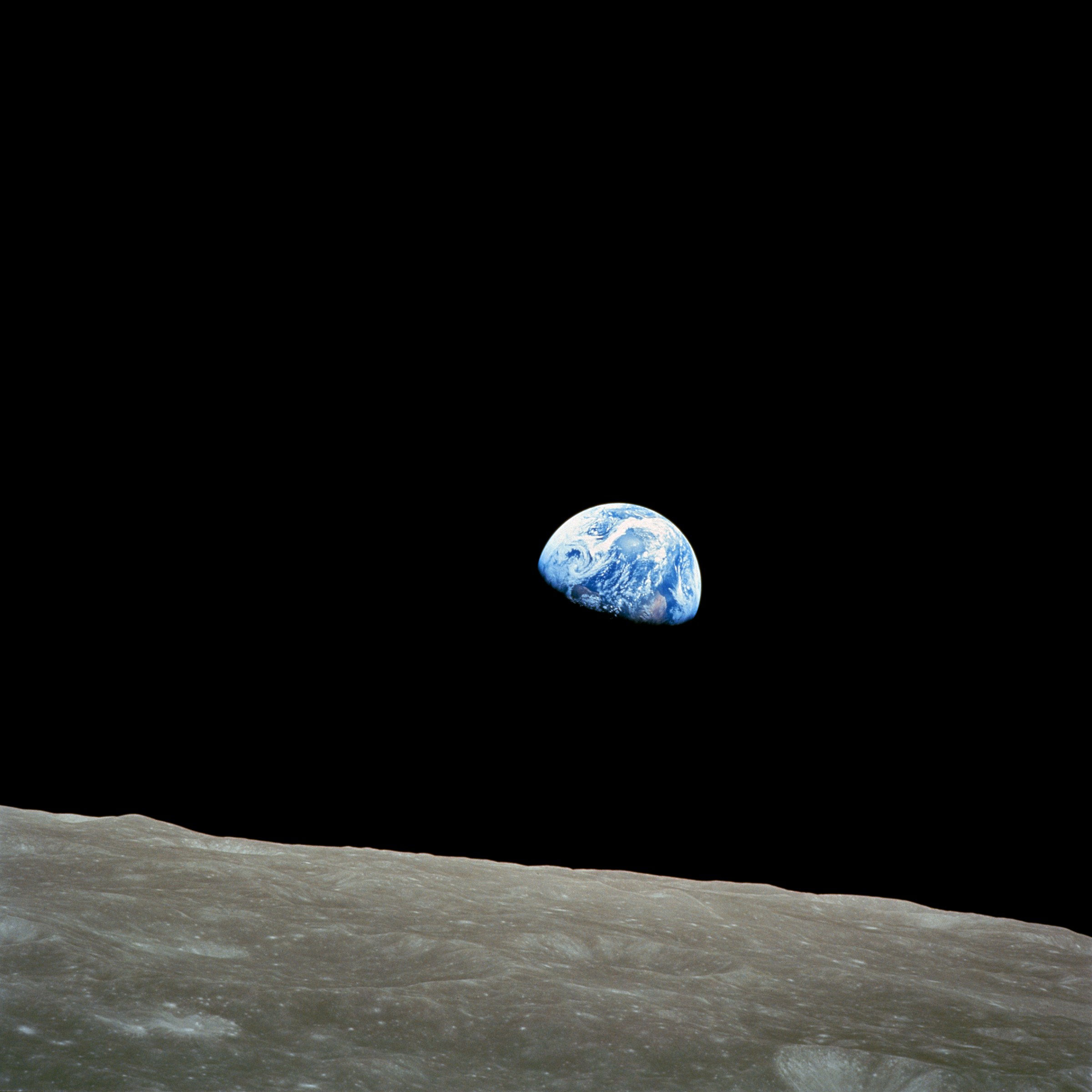
On 24 December 1968 three men became the first human beings to travel to another world. Apollo 8 carried Frank Borman, James Lovell and William Anders around the Moon ten times, and on the fourth orbit the spacecraft turned in a way that brought the Earth up over the lunar horizon. Anders reached for a camera loaded with colour film and took a photograph of a blue and white sphere hanging above a grey, broken landscape. It became known as Earthrise.
The mission had been brought forward and reshaped in a matter of months. Apollo 8 was the first crewed flight of the enormous Saturn V rocket, the first to leave Earth orbit, and the first to test navigation and engine burns at the distance of the Moon, all before any landing could be attempted. The three men also broadcast live on Christmas Eve, reading from the opening of the book of Genesis to what was then the largest television audience ever assembled.
The year 1968 had been one of assassinations, war and unrest, and the photograph arrived at the end of it with a simple and unfamiliar message. Everyone anybody had ever known was in that small object, with no borders visible and nothing else nearby. Within eighteen months the first Earth Day had been held, and the picture appeared on posters, stamps and the covers of the environmental movement.
Earthrise is often called the most influential photograph ever taken. The crew had gone to the Moon to look at the Moon, and the image that mattered was the one they took by turning around. It hangs in the argument about how to treat the planet as evidence, and it remains the plainest description available of where we all live.