The Miracle of Bern: The 1954 World Cup Final
1954 · event
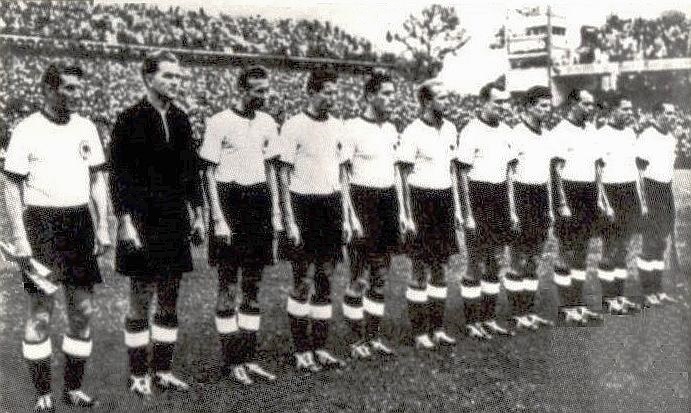
On 4 July 1954 the Wankdorf stadium in Bern was soaked by heavy rain when West Germany met Hungary in the final of the football World Cup. Hungary were the finest team in the world, unbeaten for four years, with Ferenc Puskas and Sandor Kocsis in attack, and they had already beaten the Germans eight to three in the group stage. After eight minutes they led two nil. What followed became one of the most retold matches in the history of the game. West Germany equalised before half time and Helmut Rahn scored the winner six minutes from the end.
The German team was assembled by the coach Sepp Herberger around the captain Fritz Walter, a player who thrived in wet weather, and around a group of amateurs and part timers who worked ordinary jobs. Their boots, made by a small workshop in Herzogenaurach, had screw in studs that could be changed for the conditions, a detail that entered the legend of the match along with the rain.
For a country nine years out of a war it had begun and lost, still divided and still rebuilding, the victory arrived with a force that had little to do with sport. The radio commentary was heard in kitchens and workshops across the country and is quoted to this day. Historians have described the final as one of the founding moments of the West German post war identity.
In Hungary the defeat landed differently. The golden team never won the title it deserved, and public anger at the result fed into the unrest that would grow into the uprising of 1956. The final of 1954 is remembered on both sides as proof of how much a football match can carry when a nation is looking for a way to talk about itself.