Casablanca
1942 · movie
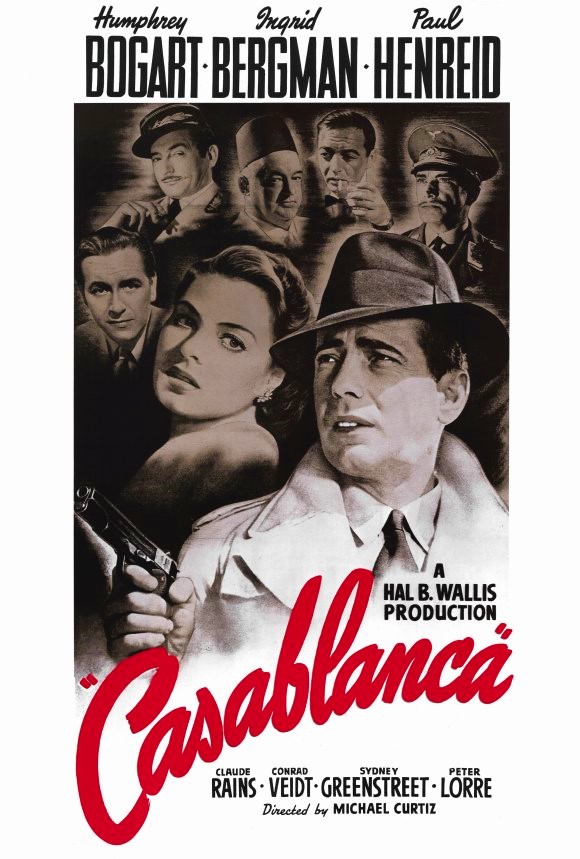
Michael Curtiz directed Casablanca, written by Julius J. Epstein, Philip G. Epstein, and Howard Koch, based on Murray Burnett and Joan Alison's unproduced stage play. The production was rushed and chaotic, with the ending improvised during shooting and Humphrey Bogart and Ingrid Bergman learning their final scenes simultaneously. Shot on the Warner Bros. backlot with no exterior Moroccan footage, the film employed recycled sets from previous productions. Despite this seemingly haphazard assembly, the cast and crew collaborated with an intuitive chemistry that transcended the script's structural flaws.
Casablanca arrived during World War II as propagandistic entertainment yet transcended its immediate political context through emotional authenticity and moral complexity. The film introduced narrative ambiguity into mainstream American cinema, presenting choices between personal happiness and collective responsibility without simplistic resolution. Its success proved that commercially viable entertainment could address serious wartime anxieties while maintaining romantic tension and humor. The film's philosophical depth emerged partly from necessity, as writers continuously revised scenes to accommodate production changes and cast availability.
Casablanca remains endlessly rewatchable because its dialogue contains more quotable lines than most entire filmographies. The American Film Institute ranked it second among American films, and audiences worldwide recognize "Here's looking at you, kid" and "We'll always have Paris" as central to cinema mythology. The film's exploration of choosing principle over desire continues resonating across generations and political contexts. It established that commercial studio films could achieve artistic immortality through emotional truth rather than technical innovation.