Rihard Jakopič
1869, 1943 · Slovenia
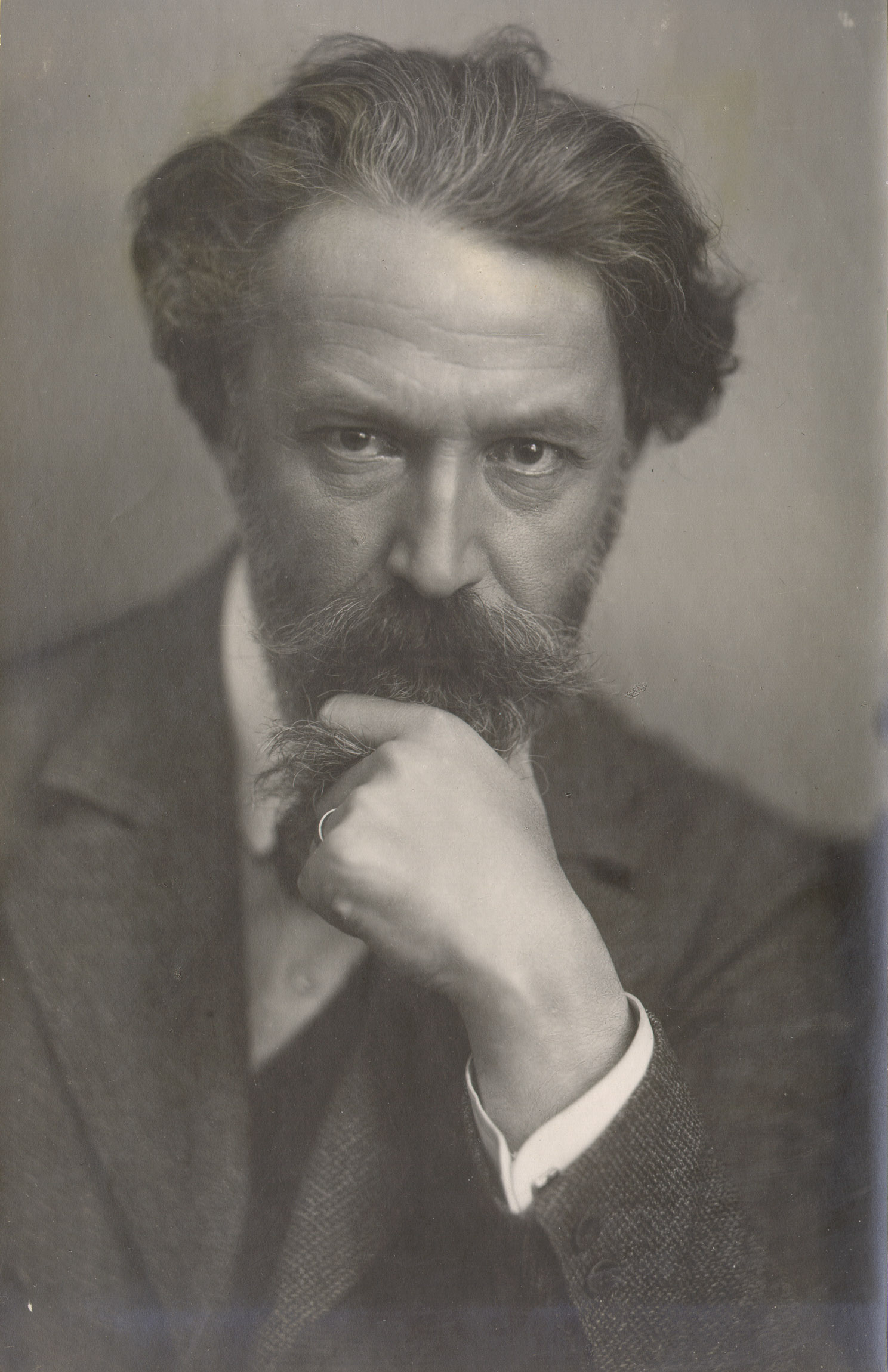
Known for: Leading light of Slovenian impressionism
“A painter who gave the Slovene landscape its light.”
Biography
Rihard Jakopič grew up in Krakovo, a quiet suburb of Ljubljana, the capital of the Duchy of Carniola in the Austro-Hungarian empire. He was born on 12 April 1869, the youngest of eight children of Franc Jakopič, a well established dealer in agricultural goods, and his wife Neža. After secondary school he passed the entrance examination for the Academy of Fine Arts in Vienna in 1887, only for illness to send him home again. He resumed his studies in 1888, moved to the Academy in Munich in 1889, and in 1890 entered the private school of the Slovene painter Anton Ažbe, where a circle of countrymen gathered around him. Among them were Matija Jama, Ivan Grohar and Matej Sternen, and the four of them would change what Slovene painting could be.
Back home, Jakopič turned the craft he had learned in Munich into something of his own. He worked in Ljubljana and, after 1902, in Škofja Loka, painting the light of a landscape nobody had looked at in quite that way before: the birches and slopes of Sončni breg and Breze v jeseni, both from 1903, the snow on Kamnitnik hill, the lamplit interior of Pri svetilki. A further period of study in Prague sharpened his sense of colour, and after his return to Ljubljana in 1906 he became as much an organiser as a painter. He helped found the Slovene Art Society, opened a school of drawing and painting that was the direct ancestor of the Academy of Fine Arts in Ljubljana, and in 1908 built an exhibition pavilion in Tivoli Park to plans by the architect Max Fabiani. The Jakopič Pavilion became the central exhibition hall of the Slovene lands, and its builder was also among those who pressed for a national gallery.
When the Slovenian Academy of Sciences and Arts was founded in 1938 he was among its early members, and the work he left behind, more than twelve hundred paintings and some six hundred and fifty drawings, had become the measure of modern Slovene art. After a long and difficult illness he died at his home in Ljubljana on 21 April 1943 and was buried at the Holy Cross Cemetery, today known as Žale. His pavilion was pulled down in 1962 when a railway line was moved, but a statue by Bojan Kunaver was raised on the site and a new Jakopič Gallery opened on Slovenska cesta in 1979. Since 1969 the Jakopič Award has been the highest Slovenian distinction in the fine arts, and from 1991 until the introduction of the euro his face looked out from the hundred tolar banknote.