Ludwig van Beethoven
1770, 1827 · Germany
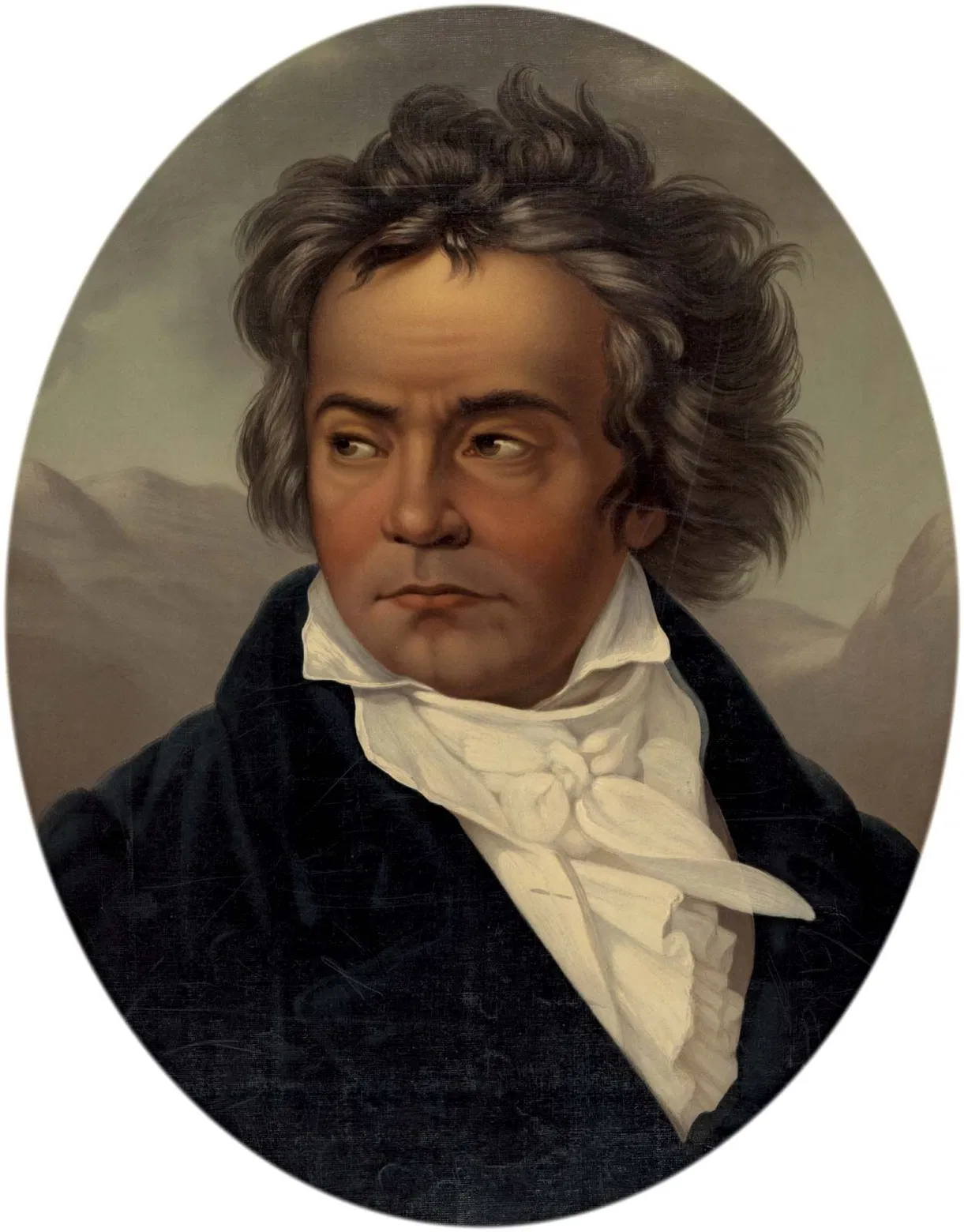
Known for: Symphony No. 9, Moonlight Sonata, Composed while deaf, Bridge to Romanticism
“Music is a higher revelation than all wisdom and philosophy”
Biography
Ludwig van Beethoven was a German composer and pianist, widely considered one of the greatest composers in Western music history. His works span the transition from the Classical period to the Romantic era in classical music. Born in Bonn, Germany, Beethoven showed musical talent at an early age and was taught by his father and composer Christian Gottlob Neefe. He moved to Vienna in his early twenties, where he studied briefly with Haydn and quickly gained a reputation as a virtuoso pianist. Beethoven's career is typically divided into three periods: the Early period (1770-1802), where he mastered the Classical style; the Middle period (1802-1812), beginning with the "Heiligenstadt Testament" where he contemplated suicide due to his increasing deafness, yet produced some of his most heroic works; and the Late period (1812-1827), characterized by profound and innovative compositions. His nine symphonies, particularly the Third ("Eroica"), Fifth, Sixth ("Pastoral"), and Ninth (featuring "Ode to Joy"), revolutionized the symphonic form. His 32 piano sonatas, including the "Pathétique," "Moonlight," and "Appassionata," expanded the expressive possibilities of the instrument. Beethoven's string quartets, especially the late quartets, are considered among the greatest achievements in chamber music. Remarkably, he composed some of his most profound works, including the Ninth Symphony and the late string quartets, while completely deaf. His music expressed unprecedented emotional depth and structural innovation, paving the way for Romanticism. Beethoven never married and struggled with poor health and difficult relationships throughout his life. He died in Vienna in 1827, and an estimated 20,000 people attended his funeral.