Katsushika Hokusai
1760, 1849 · Japan
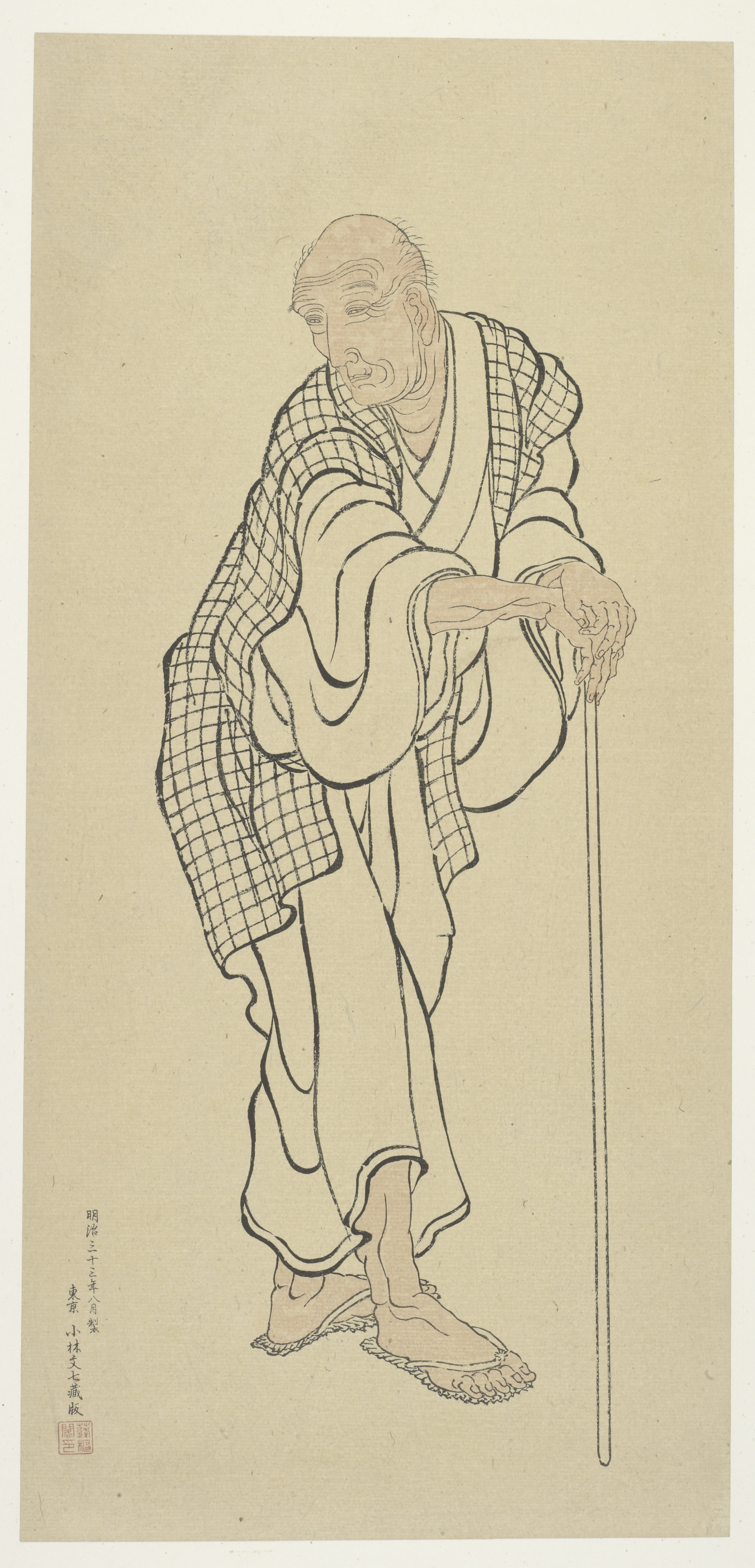
Known for: Japanese master of ukiyo-e who made The Great Wave off Kanagawa
“If heaven had granted me five more years, I could have become a real painter.”
Biography
Katsushika Hokusai was born in the autumn of 1760, most probably on 31 October, into an artisan family in the Katsushika district of Edo, the city that is now Tokyo. His childhood name was Tokitarō, and his father is believed to have been Nakajima Ise, a maker of mirrors for the shogun, who never made him his heir. He is said to have begun painting at about six, perhaps watching his father decorate the borders of mirrors. At twelve he was sent to work in a bookshop and lending library, at fourteen he was apprenticed to a woodcarver, and at eighteen he entered the studio of Katsukawa Shunshō, a master of ukiyo-e. There he was given the name Shunrō and published his first prints, pictures of kabuki actors, in 1779. He used at least thirty names in his lifetime, and the changes still mark the periods of his career.
When Shunshō died in 1793 Hokusai looked elsewhere, studying Dutch and French copper engravings and the rival Kanō school, for which he was expelled from the Katsukawa studio. He also left behind the courtesans and actors on which ukiyo-e had lived, and turned to landscape and to the working life of ordinary people. By 1800 he had taken the name Katsushika Hokusai, from the district of his birth and from the north studio of the pole star venerated in his Nichiren Buddhism. From 1814 the sketchbooks known as the Hokusai Manga poured out drawings of everything he had ever looked at. Around 1830, already in his seventies, he made the series Thirty-Six Views of Mount Fuji, which contains The Great Wave off Kanagawa and the red mountain of Fine Wind, Clear Morning.
Fame brought him no security. Fire destroyed his studio and much of his work in 1839, he moved house constantly, and his youngest daughter Ei, an artist herself, kept his household and worked at his side. He drew to the end, published One Hundred Views of Mount Fuji and signed himself the old man mad about painting. In a postscript written late in life he reckoned that nothing he had made before the age of seventy was worth counting, and that he would improve with every year he was granted. Hokusai died in Edo on 10 May 1849 at the age of eighty eight. Within a generation his prints were circulating in Europe, where Vincent van Gogh and Claude Monet studied them, and The Great Wave had become one of the most widely recognised images ever made.