Käthe Kollwitz
1867, 1945 · Germany
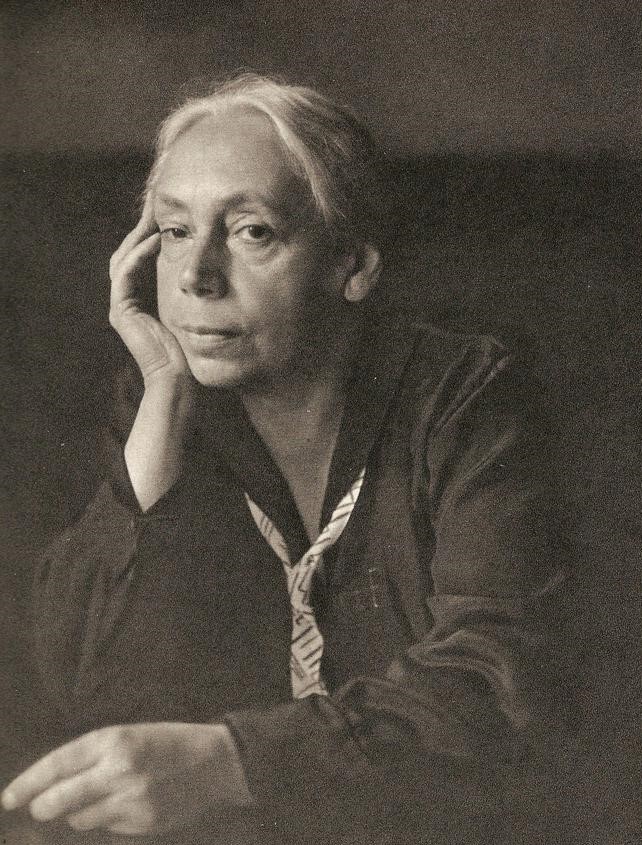
Known for: Artist whose prints and sculpture gave a face to poverty, war and grieving mothers
“Rest in the peace of His hands.”
Biography
Käthe Kollwitz was born Käthe Schmidt on 8 July 1867 in Königsberg in East Prussia, the fifth child of a mason and house builder who was a Social Democrat. Her mother was a daughter of Julius Rupp, a pastor expelled from the state church who founded a free congregation, and religion and socialism were argued over at home. Her father recognised her talent and arranged drawing lessons when she was twelve. From 1885 she studied under Karl Stauffer-Bern at the school for women artists in Berlin, and in 1888 with Ludwig Herterich in Munich, where she understood that her strength lay not in painting but in the drawn line. In 1891 she married the physician Karl Kollwitz, who kept a practice for the poor in a working class quarter of Berlin.
The patients waiting downstairs, and the women who climbed the stairs to her, became the material of her art. After seeing Gerhart Hauptmann's play about the Silesian weavers she made The Weavers, a cycle of three lithographs and three etchings that follows a revolt from hunger to defeat. Shown publicly in 1898, it made her name. Adolph Menzel proposed her for the gold medal of the Great Berlin Art Exhibition, but Kaiser Wilhelm II refused to approve a medal for a woman. Between 1902 and 1908 she made the seven etchings of the Peasant War, her finest work with the needle, ending with a mother searching a night field for the body of her son. In 1914 her younger son Peter was killed in Flanders in the first weeks of the war. She worked for eighteen years on the granite figures of The Grieving Parents, and turned to the woodcut for the cycle War and to the poster Never Again War.
In 1919 Kollwitz became the first woman elected to the Prussian Academy of Arts, which also granted her the title of professor. In 1933 she was forced to resign after signing an appeal against the National Socialists. Her husband died in 1940, a grandson named after Peter was killed in 1942, and in 1943 the Berlin flat that had been her home for half a century was destroyed by bombing. She spent her last months at Moritzburg near Dresden, where she died on 22 April 1945, sixteen days before the war in Europe ended. Her sculpture of a mother holding her dead son was enlarged after her death and placed in 1993 in the Neue Wache in Berlin, the central memorial of the German state to the victims of war and tyranny.