Henry Dunant
1828, 1910 · Switzerland
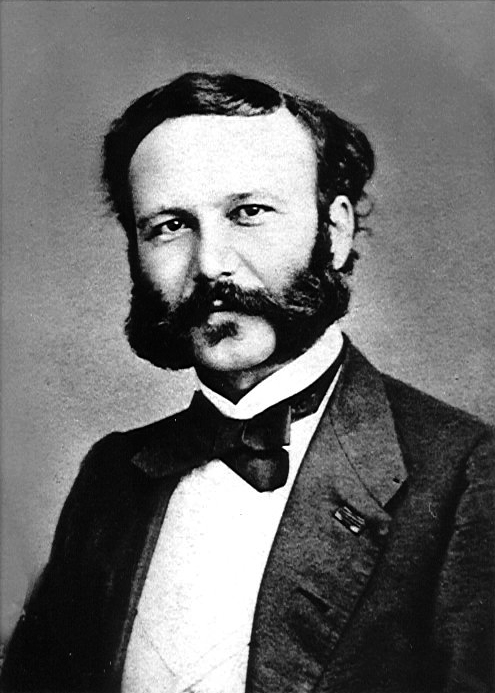
Known for: Founder of the Red Cross and first recipient of the Nobel Peace Prize
“He looked at a field of wounded men and saw no enemies.”
Biography
Henry Dunant was born in Geneva on 8 May 1828, the eldest son of the businessman Jean-Jacques Dunant and of Antoinette Dunant-Colladon, in a devout Calvinist household where charitable work was treated as an obligation rather than a virtue. His father looked after orphans and released prisoners, his mother after the sick and the poor. He grew up during the religious revival known as the Réveil, joined the Geneva Society for Almsgiving at eighteen, and spent his free time visiting prisons. In 1852 he founded the Geneva chapter of the YMCA, and three years later took part in the Paris meeting that gave the movement its international form. Poor marks ended his schooling in 1849; he went into banking and then into business in French Algeria.
In 1859 a dispute over land and water rights for his mills at Mons-Djémila took him to Lombardy to petition Napoleon III, whose headquarters lay near a village called Solferino. He arrived on the evening of 24 June, hours after a battle that left some forty thousand dead, wounded and dying on the field with almost nobody to tend them. He never made his petition. He stayed, organised the women and girls of the district, bought supplies at his own expense, set up makeshift hospitals and insisted that every wounded man be treated alike, in the phrase of the women of Castiglione, tutti fratelli, all are brothers. He also secured the release of captured Austrian doctors. Back in Geneva he wrote A Memory of Solferino, printed 1,600 copies at his own cost in 1862 and sent them to the rulers and generals of Europe with a proposal: trained volunteer relief societies, formed in peacetime, protected by an agreed neutrality. A committee of five met in Geneva on 17 February 1863, and that meeting is taken as the founding of the International Committee of the Red Cross. The first Geneva Convention followed in 1864.
The idea outlived its author's fortunes. A business collapse in 1867 left Dunant bankrupt and disgraced, and he was pushed out of the committee he had helped to create. He spent decades in poverty, moving about Europe, and settled at last in the Swiss village of Heiden. In 1895 a journalist found him there and told his story, and Europe remembered him. In 1901 he received the first Nobel Peace Prize together with the French pacifist Frédéric Passy. He spent none of the money and left it to charity. He died in Heiden on 30 October 1910. The movement he began now works in almost every country on earth.