Chiune Sugihara
1900, 1986 · Japan
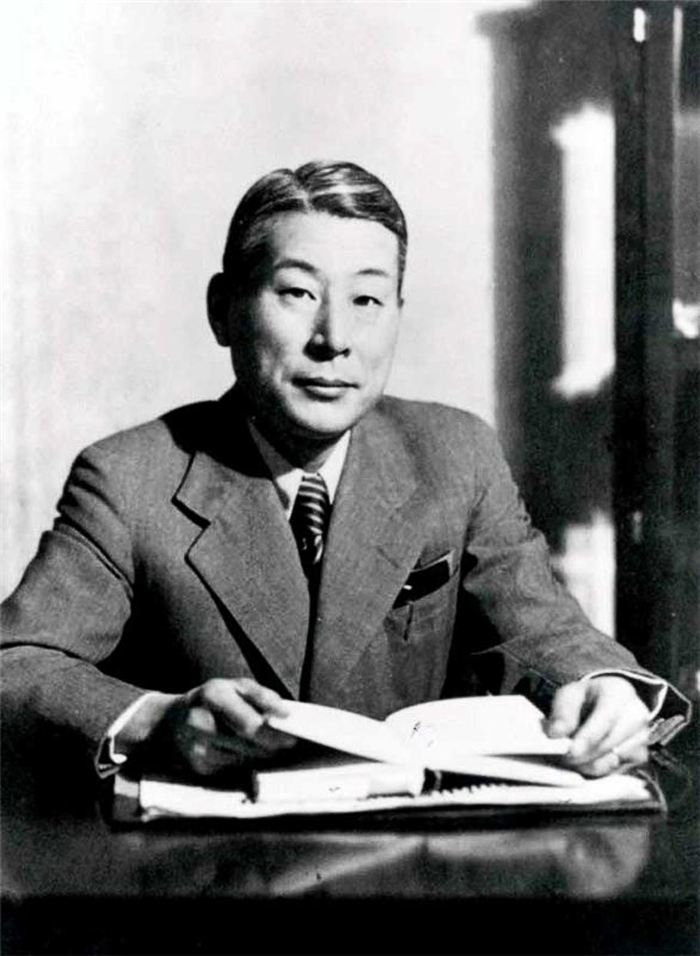
Known for: Japanese diplomat who issued transit visas that saved thousands of Jewish refugees
“He wrote visas while he could still hold a pen, and thousands crossed to safety.”
Biography
Chiune Sugihara was born on 1 January 1900 in Mino, Gifu prefecture, the second son of a tax official whose postings moved the family repeatedly across Japan. His father intended him for medicine; Sugihara, who wanted languages, sat the entrance examination and handed in a paper with nothing on it but his name. He studied English at Waseda University, passed the Foreign Ministry scholarship examination in 1919, and was sent to Harbin in Manchuria, where he perfected his Russian and German and came to be regarded as the best Russian speaker in the Japanese service. In Harbin he was received into the Orthodox Church, and in 1934 he resigned his post in the Manchukuo foreign office in protest at Japanese treatment of the local Chinese population. He later married Yukiko Kikuchi, with whom he had four sons.
In 1939 Sugihara arrived in Kaunas, then the provisional capital of Lithuania, as vice consul, with instructions to watch Soviet and German troop movements. Within a year the Soviet Union had annexed Lithuania, the foreign consulates were ordered to close, and crowds of Polish and Lithuanian Jews gathered at his gate looking for a way out of Europe. Working alongside the Dutch honorary consul Jan Zwartendijk, who wrote destination papers for the Caribbean island of Curaçao, Sugihara issued Japanese transit visas that allowed refugees to cross the Soviet Union by the Trans-Siberian Railway to Vladivostok and on to Japan. Tokyo refused him permission three times. He wrote the visas anyway, by hand, week after week, past the closing of the consulate and, by his family's account, from the window of the departing train.
The visas carried thousands of people out of reach of the German advance that came the following summer. Sugihara spent the rest of the war in Prague, Königsberg and Bucharest, was interned with his family by Soviet forces, and returned to Japan in 1947, where he left the diplomatic service. For years he supported his family by translation and trading work, spending long periods in Moscow, and said little about Kaunas. Survivors found him again in the 1960s, and in 1985 Yad Vashem named him Righteous Among the Nations, the only Japanese citizen so honoured. He died on 31 July 1986 in Kamakura. Lithuania declared 2020 the Year of Chiune Sugihara, and the descendants of those who held his visas are estimated in the tens of thousands.