Charles Darwin
1809, 1882 · England
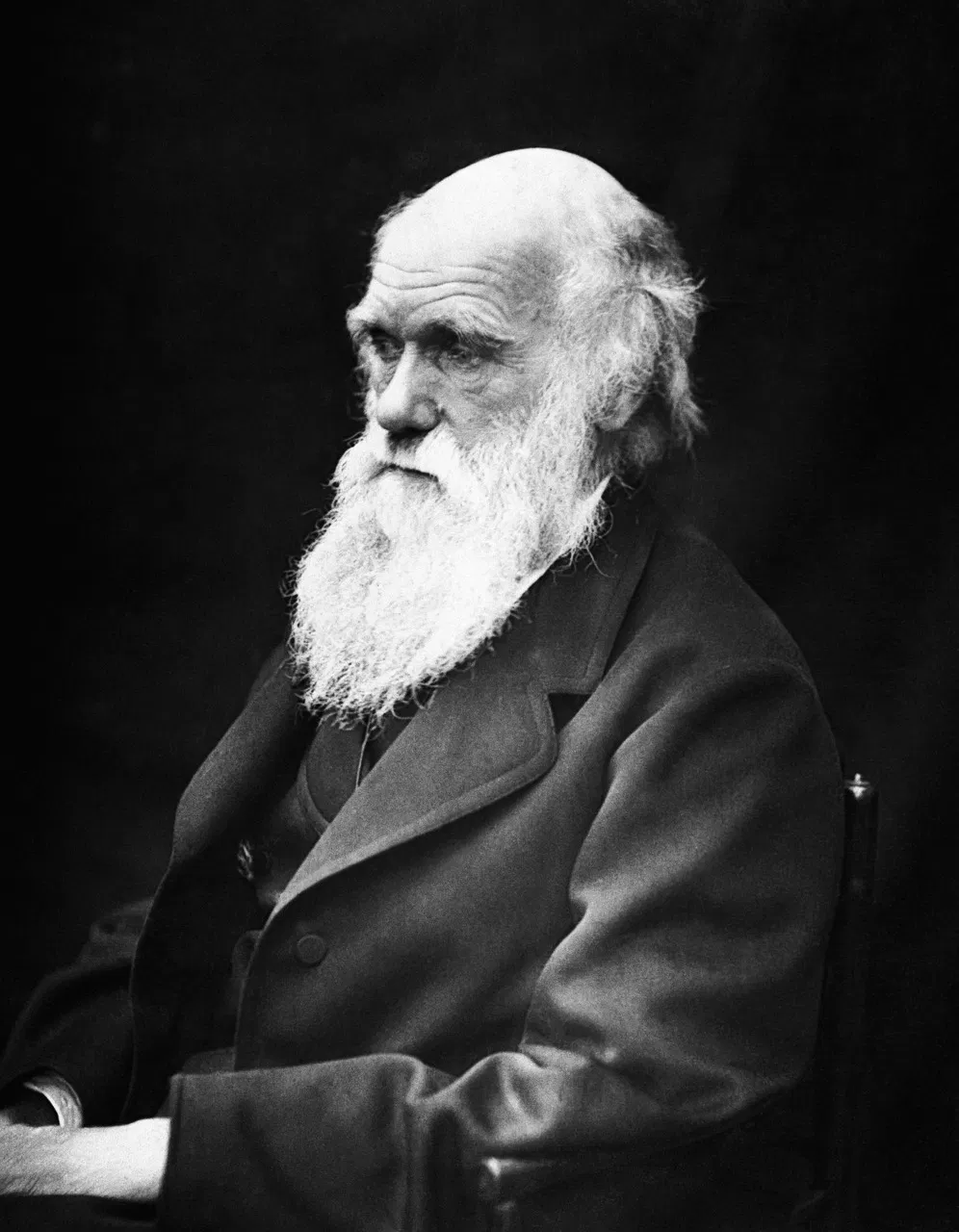
Known for: Theory of Evolution, Natural Selection, On the Origin of Species, HMS Beagle voyage
“It is not the strongest of the species that survives, nor the most intelligent, but the one most responsive to change”
Biography
Charles Robert Darwin was an English naturalist, geologist, and biologist, best known for his contributions to evolutionary biology. His proposition that all species of life have descended from common ancestors through the process of natural selection is now widely accepted and considered a fundamental concept in science. Born into a wealthy family in Shrewsbury, England, Darwin initially studied medicine at Edinburgh University before switching to theology at Cambridge. His life changed dramatically when he was invited to join the HMS Beagle as a naturalist on a five-year voyage around the world (1831-1836). During this journey, particularly his observations in the Galápagos Islands, Darwin collected evidence that would later form the basis of his theory of evolution. He noticed variations in species from island to island and began to question the fixity of species. After returning to England, Darwin spent over 20 years developing his theory, conducting experiments, and corresponding with scientists worldwide. He was prompted to publish when Alfred Russel Wallace independently conceived a similar theory. In 1859, Darwin published "On the Origin of Species," which presented extensive evidence for evolution and proposed natural selection as the mechanism. The book caused immediate controversy, challenging religious beliefs about creation and humanity's place in nature. Darwin continued his research, publishing works on human evolution ("The Descent of Man"), sexual selection, and plant biology. Despite chronic illness, possibly from a disease contracted during his voyage, Darwin remained productive until his death. He was buried in Westminster Abbey, a testament to his immense contributions to science.