Antoni Gaudí
1852, 1926 · Spain
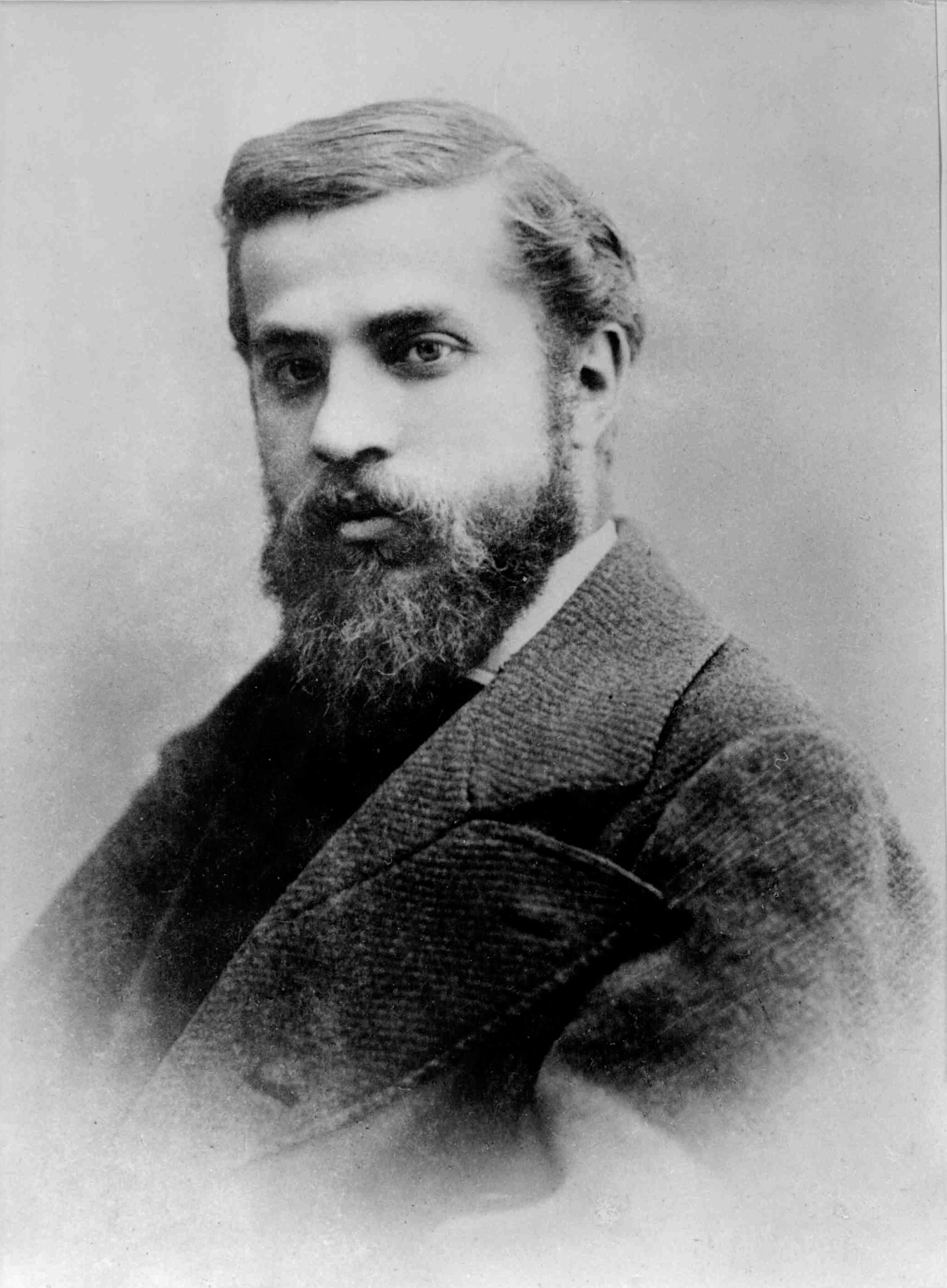
Known for: Architect of the Sagrada Familia
“He learned his forms from nature and raised them in stone.”
Biography
Antoni Gaudí was born on 25 June 1852 in Reus, in the Catalan region of Baix Camp, the youngest child of the coppersmith Francesc Gaudí i Serra and Antònia Cornet i Bertran; in later life he said that his birthplace was in fact the neighbouring village of Riudoms. Poor health, and rheumatism in particular, kept him apart from other boys and gave him long summers outdoors at the family farmhouse, where he studied the forms of plants and rock at close range. He studied architecture in Barcelona at the Llotja school and the Higher School of Architecture, paying his way as a draughtsman for other architects, and graduated in 1878; the director who handed him the diploma remarked that it had gone either to a fool or to a genius, and that time would tell. Gaudí remained a reticent man and a strict vegetarian whose fasts more than once endangered his life.
His first works were modest, the lampposts of the Plaça Reial and a workers' cooperative building in Mataró, but a display case he made for a glove manufacturer at the Paris World's Fair of 1878 caught the eye of the industrialist Eusebi Güell, and the friendship that followed produced the Palau Güell, the Park Güell and the crypt of the Colònia Güell. In 1883 he took over a church begun by another architect, the Sagrada Família, redrew it completely and made it the work of his life. He rarely produced detailed plans, preferring three dimensional models and weighted hanging chains that showed him the lines stone can hold, and he built with whatever craft the work required: ceramics, stained glass, forged iron, carpentry, and trencadís, a mosaic assembled from broken tile. Casa Batlló and Casa Milà on the Passeig de Gràcia carried the same forms into the ordinary street.
From 1915 Gaudí gave himself almost entirely to the Sagrada Família, living plainly and seeking donations for a church that was to be paid for by alms. On 7 June 1926, walking to evening prayer, he was struck by a tram; shabbily dressed and carrying no papers, he was taken for a beggar and reached proper care only late. He died on 10 June 1926 and was buried in the crypt of his unfinished church. The building has gone on rising ever since under other hands and is the most visited monument in Spain, and between 1984 and 2005 seven of his works were inscribed on the UNESCO World Heritage list. His cause for canonisation was opened in Barcelona in 2003, and in April 2025 Pope Francis declared him Venerable.