Anna Akhmatova
1889, 1966 · Russia
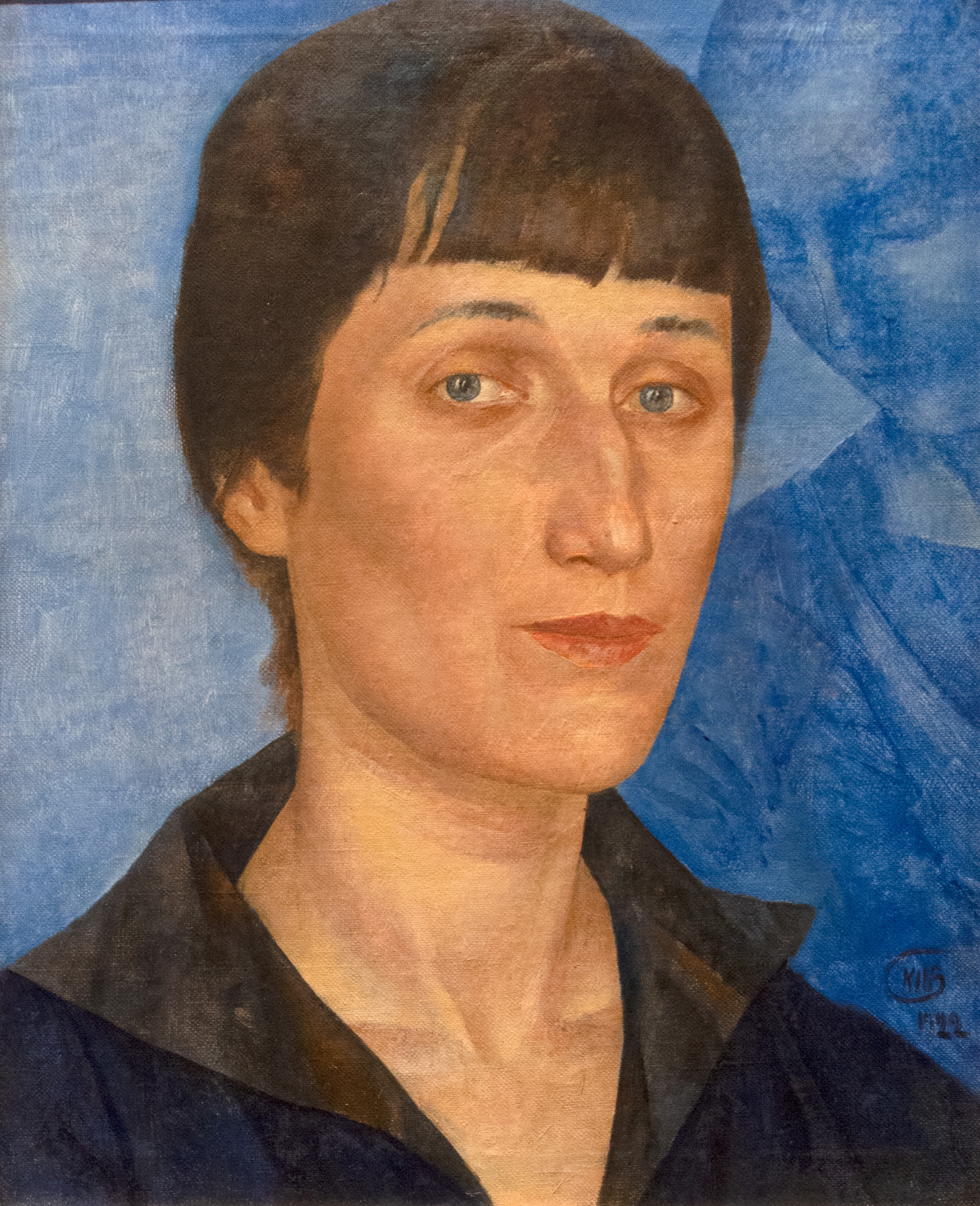
Known for: Poet who kept the memory of the terror
“She stayed where her people stayed, and gave their grief a voice.”
Biography
Anna Akhmatova was born Anna Andreyevna Gorenko on 23 June 1889 at Bolshoy Fontan near Odessa, then in the Russian Empire, the daughter of a naval engineer and of a mother from a landowning family. The household moved north to Tsarskoye Selo before she was a year old, and she grew up in the town of Pushkin's school, writing verse from the age of eleven. Her father did not want his respectable name under printed poems, so she took her grandmother's Tatar surname and kept it for life. She finished her schooling in Kiev, began law there and left it for literature in Saint Petersburg. In 1910 she married the poet Nikolai Gumilev, and later that year joined him, Osip Mandelstam and Sergey Gorodetsky in the Guild of Poets, which held that poetry is a craft of concrete things rather than a mystery.
Evening, published in 1912 in an edition of five hundred copies, sold out and made her known at once: short poems of exceptional economy, restrained where Russian verse had been declamatory, in a clear and unmistakably female voice. Books followed one another for a decade, and then the world she wrote in was destroyed. Gumilev was executed by the Cheka in 1921; her son Lev and her companion Nikolay Punin were sent to the camps, where Punin died; her work was condemned and for long periods she could not publish at all. She refused to emigrate. Out of the years spent standing in the prison queues of Leningrad came Requiem, written between 1935 and 1940, a cycle about the terror that could not be entrusted to paper and was held in the memory of trusted friends until it was safe to write down.
The later Akhmatova wrote as a survivor and a witness. Poem without a Hero, begun in 1940 and revised for the rest of her life, calls up the lost world of her youth and sets it against everything that came after. Official disfavour lifted slowly. By the 1960s she was honoured abroad, received a prize in Italy and an honorary doctorate at Oxford in 1965, and was nominated for the Nobel Prize in Literature in 1965 and again in 1966. She died on 5 March 1966 and lies buried at Komarovo near Leningrad. Because she stayed, Russian poetry kept an unbroken voice through the Stalin years, and the grief of a great many people who left no record of their own survives in her lines.