Albert Camus
1913, 1960 · France
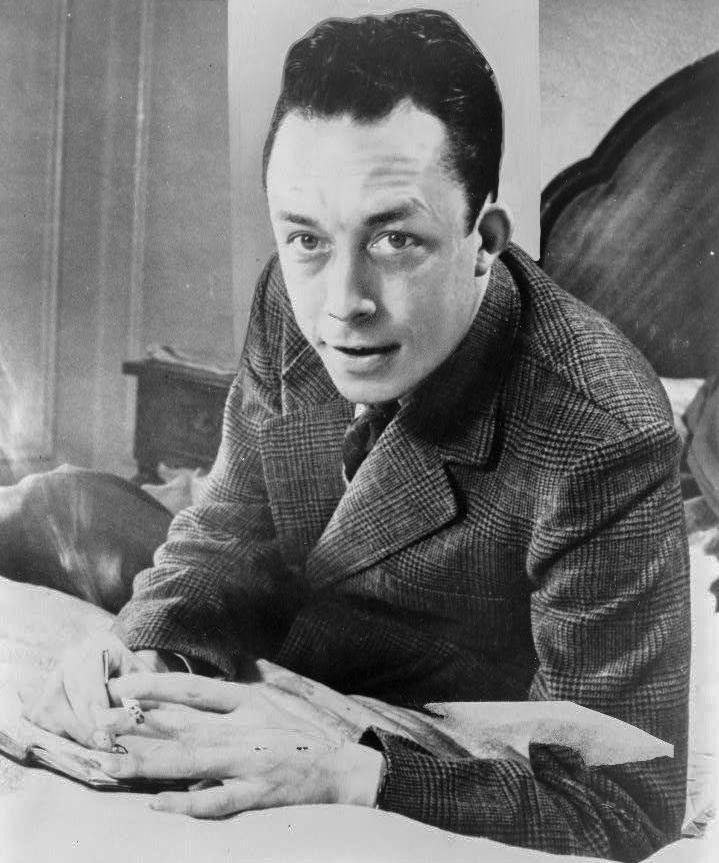
Known for: Novelist and philosopher of the absurd, Nobel laureate in literature of 1957
“One must imagine Sisyphus happy.”
Biography
Albert Camus was born on 7 November 1913 in Mondovi, a village in French Algeria now called Dréan, into a family that owned almost nothing. His father, an agricultural worker, was killed in the first months of the First World War, and Camus grew up in the poor Belcourt quarter of Algiers with his mother, who was partly deaf and could neither read nor write. A schoolteacher, Louis Germain, recognised the boy's mind and coached him without payment towards the scholarship he won in 1924; more than thirty years later Camus dedicated his Nobel address to him. He kept goal for the junior side of Racing Universitaire d'Alger, where the team spirit and the common purpose appealed to him deeply, until tuberculosis, diagnosed when he was seventeen, ended any thought of sport and turned him towards philosophy under his teacher Jean Grenier. He took his degree at the University of Algiers in 1936 with a thesis on Plotinus.
Camus was in Paris when Germany invaded France in 1940, and after failing to get away he joined the Resistance and edited the clandestine newspaper Combat. His writing came in matched pairs. The novel The Stranger and the essay The Myth of Sisyphus, both published in 1942, set out the absurd, the collision between a mind that demands meaning and a world that returns none, and answered it not with despair but with lucidity and revolt. The Plague, published in 1947, told of a city sealed by epidemic and of ordinary men who go on tending the sick without hope of reward. The Rebel followed in 1951 and cost him much of his standing with the Paris left, for it refused the murders committed in the name of history. He had briefly belonged to the Communist Party in Algiers and was expelled from its Algerian successor for declining to follow the line.
The Nobel Prize in Literature came in 1957, when Camus was forty four, the second youngest laureate and the first born in Africa. The Algerian War divided him more painfully than any argument in Paris: he pleaded for a truce that would spare civilians and for an Algeria in which both communities could live, a position almost nobody on either side would accept, and in the end he fell largely silent on it. On 4 January 1960 he was killed instantly when the car in which he was travelling to Paris left the road at Villeblevin. He was forty six. The manuscript of an unfinished novel, The First Man, lay in the wreckage and appeared in 1994; his books remain among the most widely read of the century.